CLAY PREPARATION
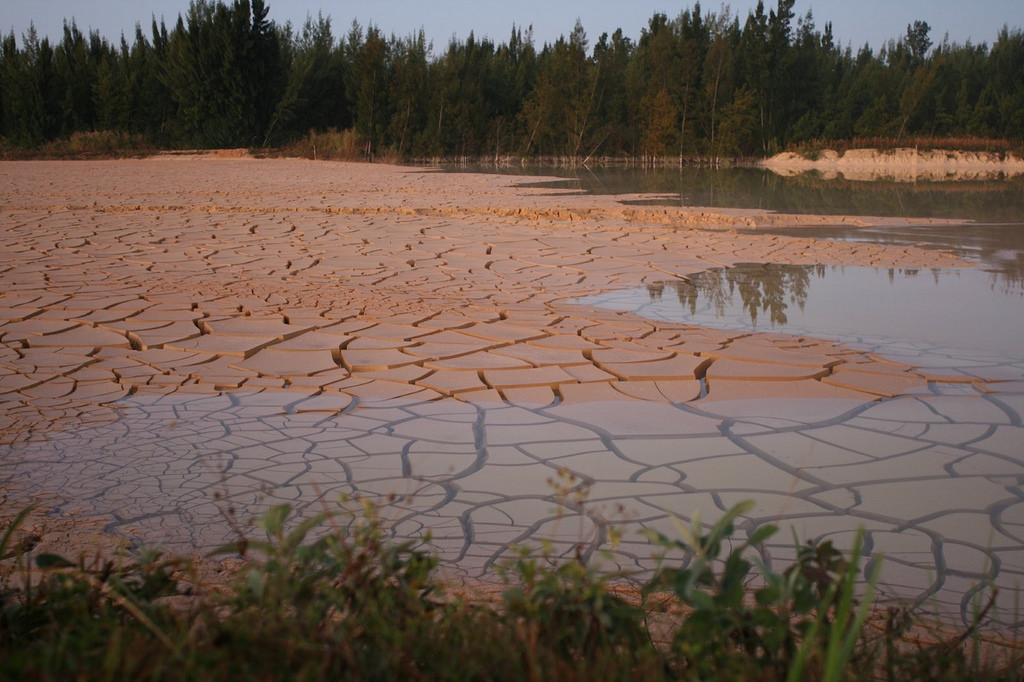 The first step in working in ceramics is the finding of a plastic clay body. In the
past, potters had to dig their own clay from locally available sources as there were
no other options. Some potters still dig their own clay and feel a valuable connection
to the earth through this process. Native American potters of the Southwest traditionally
make an offering for the clay they take from the earth to use for their pots. This
process is quite labor intensive and is very difficult for urban potters today. Most
buy commercially available clay bodies from one of the many ceramic suppliers in the
area they live as shipping costs for something as heavy as clay can become expensive.
The first step in working in ceramics is the finding of a plastic clay body. In the
past, potters had to dig their own clay from locally available sources as there were
no other options. Some potters still dig their own clay and feel a valuable connection
to the earth through this process. Native American potters of the Southwest traditionally
make an offering for the clay they take from the earth to use for their pots. This
process is quite labor intensive and is very difficult for urban potters today. Most
buy commercially available clay bodies from one of the many ceramic suppliers in the
area they live as shipping costs for something as heavy as clay can become expensive.
WEDGING
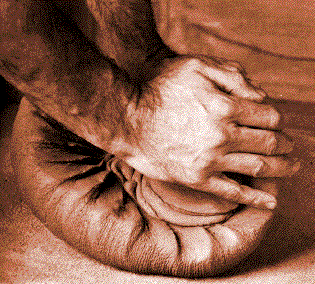
Wedging is the process of mixing the clay by hand by rotating and pressing a clay
ball on a table. The purpose is to thoroughly homogenize the clay and to remove all
air bubbles. This is particularly important, as the presence of air bubbles in the
clay will result in explosions in the kiln as the air pockets expand and burst. Your
work is ruined, as is any piece near yours in the kiln. You will know if there is
air in your clay if you see holes, like in Swiss cheese, when you slice through the
clay with a wire.
FORMING
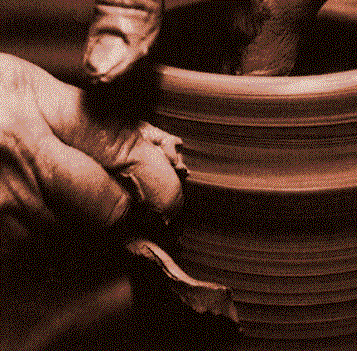
After the clay has been thoroughly wedged, it may be formed by a variety of methods:
slab, wheel, coil, pinch, and mold. These methods may be combined, or used singly.
In Art 186, we will explore the basics of slab and wheel to create functional ceramics
such as tableware. In the handbuilding classes, students focus on non-wheel techniques
such as slab, coil, pinch, and the use of molds.
DRYING
When the clay bag is opened, the drying process begins. As clay dries, it loses water,
becomes stiffer, and shrinkage begins. After forming, pieces you create should be
wrapped in soft sheets of plastic (without holes) and placed on the shelves in the
DAMP ROOM. The plastic will slow down (but not stop) the drying process, to ensure
that when you return several days later, your pieces will still be workable. Be very
careful as you wrap your work in plastic as you can distort the pieces easily. Be
very, very careful in placing your work on the shelves in the damp room because you
can easily destroy the work of other students. You will have an assigned storage shelf
in the damp room for your work. Use only your assigned shelf area. Do not lift the
plastic from the work of other students. This can distort or ruin their work also.
If you need plastic, ask your instructor for it. Under no conditions should you take
plastic from another student's work. This will dry their work too fast, possibly causing
cracking, and not allow them to continue working on a piece. Should you be caught
doing this, you will have your lab privileges restricted.
LEATHERHARD
After your pieces have dried for a few days in the damp room in plastic, they will
reach of stage of partial dryness referred to as leatherhard. This stage of drying
is characterized by its flexibility. This is an excellent time to refine the piece
carving excess clay, adding handles or decorative elements, trimming the footring
of a bowl, etc. This is the last chance you have to change the shape of the piece!
It is very important that you be able to recognize the leatherhard stage. Once the
clay has dried beyond this point no further shape changes can be accomplished.
GREENWARE
When a piece of pottery has dried completely it is referred to as a piece of greenware.
This means it has lost all water through evaporation and has no flexibility. Bending
it will break it. You cannot add anything to it. You cannot carve anything from it.
You cannot do anything to it except break it! This is purely a passive state for the
clay awaiting the first firing. After you have finished work on a piece, you must
carry it from the damp room and place it carefully on the greenware racks. The work
will remain there until enough pieces have accumulated to fill a kiln. Only work on
the greenware carts will be fired; work left in the damp room will not be fired. It
will simply sit in the damp room all semester. You must carry pieces to the greenware
carts in order for them to be fired!
BISQUE FIRING
After your work has dried to greenware on the racks, and enough pieces have accumulated
to fill a kiln, the work is loaded into the kilns for the first of two firings. This
firing is to approximately 1800ºc F. This hardens the ware making it easier to handle
without breaking during the glazing process. Clay fired at this temperature still
retains its porosity however. The porosity of a material refers to its ability to
absorb a liquid. The liquid part of glaze, in this case water, is absorbed by the
porous bisque ware, and the glassy materials in the glaze are left deposited on the
surface of the bisque ware. So, the bisque process is simply done to make glazing
easier. The bisque firing takes a total of 3 days from start to finish. On day one,
the kiln is load ed with the dry greenware and the kiln is lit, set at a low setting
to dry the ware, and left overnight to slowly warm. Firing too fast during this early
stage of the firing can easily cause the work to explode! On day two, the kiln is
gradually turned higher and the temperature rises until the target temperature of
1800º F degrees is reached. The kiln is then turned off and allowed to slowly cool.
On day three, the kiln is opened, the bisque ware unloaded, and the pottery returned
to the lab, where it is stored on shelving marked BISQUE WARE.
GLAZING
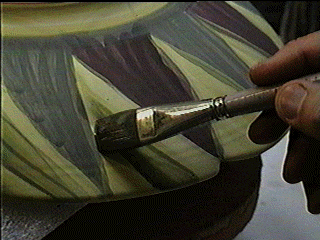
Now the glazing process can begin. The glaze, a mixture of ground glass, clays, coloring
materials and water, is applied to the bisque pot by dipping, pouring, spraying, brushing,
sponging, or some combination of these techniques. The footring of each piece must
be free of glaze and the pot glued to a bisque fired 'cookie' made from a stoneware
clay body. Pots are then placed on the glaze racks. The glazed pots accumulate until
there are enough to fill a kiln.
GLAZE FIRING
Again, the firing process is a three day affair. After the glaze firing temperature
of 2350º F has been reached, the pots cool, and on day three, are unloaded and stored
in the room in the locked, yellow cage near the north door. Once the ware is out of
the kiln, we recommend you promptly take it home or store it in your locker. We do
not have the storage room to warehouse all the work that will be produced! Remember,
unsigned work will not be fired. This is the final step in the process for the vast
majority of pieces produced. However, there is one final, optional procedure:
OVERGLAZE FIRING
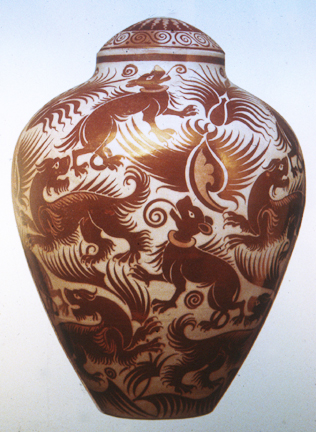
Sometimes, potters choose to do additional firings to achiever color and surface effects
not possible in the glaze firing. These effects include lusters, china paints and
decals. These overglaze techniques are fired at extremely low temperature (1300º F.)
and because of that, brighter colors and metallic luster surfaces are possible. These
are, loosely speaking, very low fire glazes that are melted atop the previously fired
high temperature glaze. At this low temperature, the underlying glaze does not even
melt, instead the luster, china paint, or decal melt onto the glaze and fuse, semi-permanently.
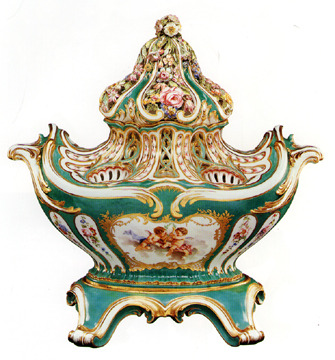
This is the major disadvantage of this technique. The overglazes are not as permanent
as high temperature glazes. Abrasion will erode this coating, and eventually, the
overglaze will be gone or muted by time. Still, unusual and exotic effects are possible,
and for this reason, potters are interested in this area. Some techniques, like china
painting, often involve multiple overglaze firings, layering one color atop of another
as complicated designs emerge.
RETURN TO TOP OF PAGE